Monday, June 13, 2016

Old Dominion (33) 50


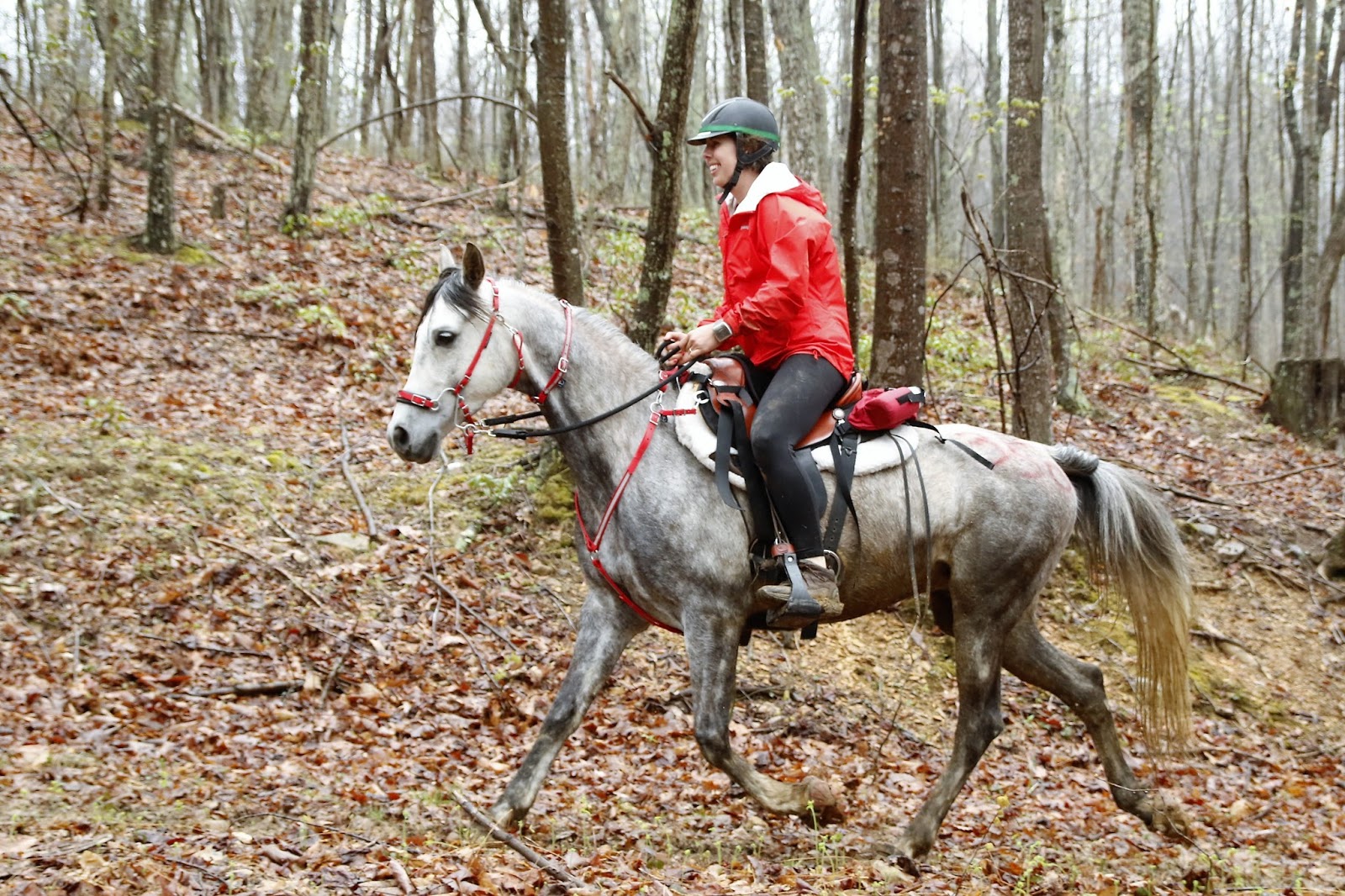
Poptart is amazing, he is a Rock Star (or should I say PopStar!).  We rode 33 miles and 11,535 feet of elevation change of the Old Dominion 50 mile endurance ride before a rider option pull due to girth area soreness at the Laurel Run Vet Check.

Back to the beginning, upon arrival on Friday afternoon he settled in like a well-seasoned competitor. He was calm on vetting in and then we went for a short ride to stretch his legs and check out the start of the trail.  He was quite alert and ready to move out. He wanted to make sure that I really meant it when I asked him to walk and not trot, or trot and not canter.  We agreed that he could walk as fast as he wanted as long as he kept to a walk on a loose rein.  Later, he had his pre-ride dinner of Ultium (his normal feed) with 1 ounce of Enduramax electrolytes soaked into a mash; I had been adding in electrolytes since the day before in anticipation of the notorious heat and humidity of the Old Dominion.  It was forecast to be in the mid-80's on ride-day with a small chance of showers; earlier in the week the high's were in the 60's.


Before dinner I was checking out the trail loop distances between holds, hold closing times and Graham and I calculated my goal for arrival time into each hold.  I set a window with a slow average speed of 5 mph (for the entire race) to finish in 10 hrs and faster speed of 6.25 mph to finish in 8 hrs. This helped me know if we were moving at an appropriate pace to finish in time and also not exceeding Poptart's abilities.  Having ridden most of the trail during training or during last year's 25 mile ride on Rogan and having asked seasoned competitors lots of questions I set my ride strategy.  Endurance has a saying "never hurry, never tarry" and this is especially applicable to the Old Dominion known for it's steep climbs, technical footing (ie loads of rocks), and very high heat and humidity.  The first loop to Bird Haven vet check is 15.7 miles and has one significant climb, commonly referred to as the power line climb, the remainder of that loop is mostly single track forest trail or gravel forest service road.  The second loop was 16.4 miles to the Laurel Run Vet Check. This loop is known for the Falls Ridge climb which is very steep and rocky (we hiked it on Memorial Day to check it out-- there is a waterfall on a side trail off of the climb).  You typically are riding this section during the highest combined heat + humidity level of the day (generally over 150 combined heat + humidity). This makes it very difficult for the horse to cool himself through sweating as it just doesn't evaporate and there is a great potential to overheat your horse in this situation, especially as the temperatures are still in the low 80s so it feels cool to the rider.  After the climb you ride a rocky ridge for about 3 miles where the speed is mostly limited to a walk due to the technical rocky footing.  Then you descend Laurel Run trail (which we train on regularly and Poptart knows well) which consists of a steep downhill shale grade for about 2 miles and then it transitions to another 3 miles of slightly downhill forest service road into the vet check.  The third loop consisted mostly of forest service road and did not have any steep climbs to the best of my knowledge; I had not previously ridden much of the third loop, but had been told it was the easiest part of the trail.  The 4th section was just 6 miles from the Bird Haven Vet Check back to basecamp which also was supposed to be okay, mostly back tracking over what we rode at the start of the ride.

To start with my first ride plan goal was to have a calm and safe start, I did not want a repeat of No Frills where I had to dismount to stay safe.  After catching up at basecamp, I planned to start out with my friends Dale Weaver, Wendy Rush, and Jennifer and Claire Morris and then ride what Poptart needed; I was concerned about committing to riding with a group in case Poptart needed to go slower. It is always fun to ride with friends, but it is important to ride the ride your horse needs and not get caught up pacing with other horses that may move faster or slower than your horse.

For the start my goal was a controlled trot, ideally on a loose (or semi-loose) rein. While a walk would have been great for training purposes I did not set that as a goal. One reason being that the first part of the trail is forest road that has great footing to make good time (and remember "never tarry"), and second I thought it may lead to a 'discussion' to ask Poptart to walk calmly while 68 other horses left him behind at a trot or canter. A nice, obedient trot while staying with the pack seemed a very reasonable goal.  After the start I planned on making as much time as possible on the first loop since it was the coolest part of the day and in general had less technical footing than the other portions of the trail.  Also, I planned to dismount and hike both the large climbs in order to save my horse and as we would be walking the steep rocky climbs anyway  and I would not lose any time doing this. Basically, I planned on going very slow on both climbs, hiking and walking, going slow over all the very rocky technical ridge tops, and then making up time with nice forward trotting and some cantering whenever the footing allowed. This should create a fast first loop, very slow second loop, and very fast third and 4th sections hopefully landing in my goal of finishing between 8-10 hrs.

We tried to get to bed early, managing between 9-10 pm, knowing the OD camp wakeup call would come early at 4:15 am for the 100 milers.  The OD has done a great job of having a loud and well-disturbed sound system in camp so no one will miss the wakeup call or other ride announcements.  I set my personal alarm for 5am as the 50 mile ride didn't start until 6:45 am.

Awakened at 4:15 by the OD wakeup alarm (very effective), snoozed until 5 am, then I got up and fed Poptart (ultium mash with electrolytes) and watched the 100 mile horses start. It is very picturesque to see the horses depart in the early dawn light. I stuck to my time schedule having Poptart stretched (pre-ride bodywork) and tacked up by about 6:15, giving us about 30 minutes to warm up and remember last minute items :) Graham helped making sure I had all my gear and holding Poptart for tacking and we went over last minute crewing plans to make sure he had everything we would need at Bird Haven.  Graham then checked us in with the start-timer while I started to warm up Poptart.

Poptart was very well relaxed and obedient in our warm up, he seems to really take to ride camp like a seasoned competitor, happy to meander down the row of horse trailers watching all the commotion on a loose rein.  We warmed up with walk/trot transitions and leg yields across the basecamp road in both directions.  Poptart and I then met up with Wendy Rush, Dale Weaver, Jennifer and Claire Morris who were all riding the 50 together.  We started mid-pack and Poptart walked across the start line on a loose rein, YAY!! One huge goal met already!!!  We then all started trotting  in a group of about 7 horses with more in front and behind us.  Poptart was doing great, but then we were passed by about 3 horses and he did get a little worked up trying to canter, but did listen quite well and settled in just a few minutes. After we turned off the starting road onto the trail there was a short hill and the rest of my group slowed to a walk for a minute, but Poptart was ready to go, so we went on ahead and from then on rode independently joining different friends at different times as our horses paced together.

The first loop really went as planned. We made good time trotting through the woods and when we got to the first steep powerline climb I dismounted and hiked. We had one good spook when Poptart was looking the other way and to him a small log suddenly appeared across the trail (I saw it the whole time), he went left and I went right, but then we both went forward together and all was well. It was a good test of the Freeform treeless saddle stability, it didn't budge! I was really impressed with Poptart several times when he stayed to drink at creek crossings while the other horses in front moved on down the trail. After the climb, we went steadily downhill, mostly on forest service gravel roads.  He can really motor downhill, we were readily clocking 10 mph trotting and he wanted to canter downhill several times (at which point I said you really need to slow down!).  Were having so much fun speeding downhill that I missed the turn back into the woods to the Bird Haven Vet Check and unfortunately another rider followed me too.  We both went about 1.5 miles before turning around and searching for our lost turn.  It was easily found once we were looking, ride management had done a fine job marking the turn for all but the most oblivious riders ;)  Despite the few extra miles we arrived in Bird Haven right in the middle of my pre-planned time window.  As typical so far, Poptart was pulsed down as soon as Graham and I could get the tack off and present to the pulse timer. He passed his vet check with all A's, with slightly quiet gut sounds on one quadrant, but he was eating and drinking very well.  Graham had everything set up at Bird Haven and was wonderful getting food, refilling my electrolyte drinks and getting us ready for the next 16 miles! Poptart spent his vet check eating, drinking and resting like the seasoned competitor that he will be one day.  We saddled up 10 min prior to my out-time and then we were off on loop #2.

The beginning of loop #2 was new trail to me, the footing was fairly good and we did a fair amount of cantering. We did our fastest gallop ever at a speed of 15 mph (LOL, race horses gallop at 30-40 mph) while sharing the trail with Skip Kemerer with a group of several other grey arabians.  Around this time Poptart started to self-regulate his speed with his aerobic capacity. It was amazing, whenever his heart rate started to reach 150 bpm he slowed his gait and after he recovered he started going again all on his on accord. It was awesome to watch and to be the partner of a horse that is so obviously doing the job he was born and bred to do.  He is going to be an endurance machine :)  When we reached Falls Ridge climb, I dismounted as planned and hiked the 1500' 2 mile climb; it was much harder to hike after riding 23 miles in 90 degrees than previously on Memorial day weekend.  My heart rate was about 200 bpm and Poptart's was 100 bpm at the top.  I remounted and we walked most of the ridge, trotting a few sections when the footing allowed and had one movie worthy canter through a mountain meadow looking out over the Blue Ridge mountains and Shenandoah valley.  We also had a ridge line rattlesnake encounter. Jaime McArdle and Pascalle Loomis were both trotting in front of us when Jaime yelled out "Rattlesnake", in just a few seconds I heard a loud rattle on my right and movement in the bushes. Poptart jumped and swung his right front leg away. I thought he was okay but dismounted to check and make sure he did not get bit by the snake; he was fine.  We finally reached Judge Rye Rd and the sharp turn to descend Laurel Run Trail.  The OD had placed water troughs at this point and Poptart finally decided that water troughs were, in fact, not horse eaters and he had a good long drink.  Poptart knew this trail and recognized that his 'horse-trailer' should be parked about 5 miles downhill. He sure did motor down that trail, amazing balance and dexterity down the shale slope.  When we reached the last portion of forest service road before Laurel Run Vet Check we back to riding with Jaime and Pascalle and had also caught up with Karen Wade, Nick and another rider in their group.  We all kept pace down the road, but when Poptart kept shifting to the bushes to pee, Karen Wade slowed her group and waited for us. Thank you Karen, Nick and friends for waiting-- it was getting very hard for Poptart to keep holding it to keep up with his friends - you guys are awesome! We hand walked the last 1/2 mile into the vet check, immediately stripped tack and presented for pulse. Poptart just made pulse at 64 beats per minute after walking up hill and standing in the sun (later I learned it was 95 degrees!). He passed his vet check with all A's and I was very impressed with a CRI (cardiac recovery index, to measure if your horse is metabolically healthy) that went from 64 bpm to 52 bpm on a return trot uphill in the sun! He is going to be an endurance rock star!

Holly Daum, who owns Max - Poptart's half-brother, was volunteering at Laurel Run and helped me get Poptart comfortable by holding, sponging, fetching food/water (for both of us). Thank you Holly!
Unfortunately when I went to tack back up Poptart grunted and tensed his abdomen when I girthed him. I immediately removed the saddle and palpated his back and girth area. He had a very reactive area with mild swelling and slight chafing at the girth behind the elbows. After thinking it over for a little bit and seeing if I could position the saddle to avoid the sore area, I re-presented him to the vets. Dr. Julie Bullock and Dr. Bob Marshall both looked at him and while I could ride him bareback or try riding with saddle further back it was likely he would be pulled at Bird Haven if he continued to sore. I decided that Poptart had done a fantastic 33 miles and did not deserve to be pushed or ridden when he hurt so we rider-optioned.  The radio volunteers communicated with Bird Haven to let Graham know that I was pulling and Duane Martin (in charge of the drag riders) trailered us back to camp. Thank you Duane and all the other volunteers!

Poptart ate and drank well back at camp and rested for several hours while Graham and I did the same. I poulticed and wrapped Poptart's legs for the first time and that went very smoothly-- it helped that all he wanted to do was sleep.  I also applied vetericyn, desitin, and poultice to his sore girth area. That evening we decided to head home since it was short drive and we thought Poptart would rest easier in his home pasture, and Graham and I were both very eager to have the most wonderful feeling shower ever and an air-conditioned home.  Just as we were turning the corner into our rural subdivision we saw a circular fire in the woods at the base of power pole that had a flaming transformer at the top. I called 911 and reported the fire.  We saw our neighbor who had also just reported the fire and called the power company.  The power company said the power should be back on my midnight... After unloading Poptart and settling him in, feeding the other animals, and unloading the essentials from the truck and trailer in the dark without power we finally went in to see if we had any water pressure. Nope, no water pressure, no shower, no fan, no air-conditioning...  Thankfully we still had the portable water tank in the back of the truck and we filled up a 5 gallon horse bucket, grabbed a flashlight, and had the best bucket shower ever! Even dunked my head in for a shampoo! The power came back on at about 2:30 am and I went out to check on Poptart. He was up at the barn munching on hay and seemed just fine.

The next morning I cold hosed his poultice off and cold hosed his girth area as well.  He was at least 50% less reactive and his skin looked great, no galls or sores or swelling.  Today, 48 hours after presenting with the girth soreness he had zero reaction to palpation and appears completely normal.  I think he is a bit of a sensitive princess, but that communication will help ensure I always keep him comfortable and nothing progresses to the point of true injury (hopefully!)


 Now for the post-game...

Sunday, May 22, 2016

Riding in the Rain and Preparing for 50 miles

Poptart and I are preparing to complete the Old Dominion 50 mile ride June 11th.  We have 12 hours to complete, including vet checks and holds, so our minimum average pace must be 4.1 mph to complete.  Since this includes stops our actual moving speed needs to be around 5-6 mph to complete, and I suppose my goal is an average speed of 5.0-5.5 mph for the ride, and moving speed of 5.5-6 mph. My average speed for the No Frills 30 mile ride was 4.6 mph (including stop time) and my moving speed was 5.5 mph. Long Slow Distance!

To prepare for our first 50 mile (or any ride!) many things have to work out at the right time. At times I think the hardest part of an endurance ride is successfully making it to the ride!  Appropriate conditioning in all weather, saddle fit, shoes/boots, optimum body condition and nutrition, my fitness and health, truck and trailer both working, weather..are just some of the things involved in preparing for a ride.

Today we practiced riding in a cold (50 F) and steady rain; unfortunately Old Dominion is more apt to very hot and humid and from what I have read it takes about 2 weeks while conditioning to acclimate to hotter weather. We are screwed... I am going to try to get in just a few 7-10 mile loops in the next 1-2 weeks, hopefully in hot weather, prior to giving Poptart a full 7-10 days off prior to the ride.

I have decided to put shoes on Poptart for the 50 mile ride and most likely for the rest of this season. The renegade boots work, most of the time, on our training rides, but 'most of the time' is not okay for 50 miles. Time is valuable, especially with the Old Dominion mountainous terrain, and I can't afford to spend valuable minutes repeatedly replacing and repairing boots and that is assuming that I can actually repair them enough to finish the ride.  The biggest thing to me, was that I was thinking what equipment I need to repair all my boots at each vet check in order to be able to continue the ride (per my experience at the No Frills 30).  I  realized that is not what I need to be thinking about, instead I need to be thinking about taking care of my horse and riding our best ride together.  So for now I will carry my renegades (for when/if we lose that shoe) and have additional spares with my crew at the Bird Haven vet check.  I may try glue-on boots or easy care flip-flops in the future, but for now only one thing at a time!

On that note, Poptart gets his shoes on Thursday and then we head over for an Osteopathic adjustment session (http://rectortownequineclinic.com) so hopefully he will be in top shape as well. I have a corrective massage session scheduled for me both the week before AND after the ride, LOL! My pelvis tends to get a twist and I know that makes it harder on Poptart so I hope to fix myself so he is more likely to stay sound and comfortable. I know I need all the help I can get.

Onward to saddles and saddle fit... I am trying out Freeform Treeless Saddles (http://treelesssaddle.com) as Poptart will need a custom or modified tree for his tiny and narrow back which may be quite time consuming and expensive to get right; if we need to go there we will but first I am going to try some other ideas out.  What I like about the Freeform - 1. lightweight, with all my gear, rigging, cinch, etc we are under 20 lbs. 2. Adjustable stirrup position, I can move my stirrups so they are underneath of me enabling better classical rider positioning. 3. No pressure points, other than my weight, so the shoulders are free to move easily and his back can lift. 4. I can choose a seat that has a level area for my pelvis (to enable better classical rider position) 5. It has loads of velcro and shimming options so I can make almost unlimited adjustment to both the rider and horse fit as needed.  6. It has been proven by many 100 mile ride completions and wins, including the Tevis. What I dislike about the Freeform - 1. the stirrup attachment may not distribute pressure well; so far in practice this does not seem to be an issue and apparently computer pressure scans show it to not be an issue, but I remain paranoid/concerned. 2. The back of the saddle does not have a butterfly or cutout shape, so if the pad does not lift it enough or if you have a dippy back horse (which I do not) it in theory could pressure the spine area.   3. The problem with any treeless saddle, rider weight distribution and spinal clearance; we are starting with a double laminated felt and memory foam skito pad to help with this. So far his back has been good (no soreness) and we haven't had many sweat patterns as it has been cold and wet, but what we have had looks good so far with nice spinal clearance.

I initially tested the "happy ass" or ultimate trail seat on the endurance short-back base and while it was supremely comfortable I seemed to have keep 'scootching' to get a neutral pelvis, so today I tried out the classic seat in suede, which is firmer but has a level seat area. I loved it!  Constant rain not withstanding, it was a fantastic 12 miles today! Poptart moved in wonderful relaxed self-carriage and I felt completely with-him (a lot of the time anyway!).  Trotting downhill, in the rain and water ladened trails, it was almost magical. We were on a very soft loose rein, his neck was arched and he was using his hindquarter to balance and it felt like he was my legs.  For some reason it was how I imagine riding a well-schooled Paso Fino or high-school Andalusian would feel, just balanced and 'there' while listening and moving forward!  I can't get enough, I am ready to go ride out in the rain right now!

The trail was loads of fun (Thank you Amanda and Sonja for taking me out in the rain!). It was well-maintained (no bushwhacking!!), with really good footing especially considering how wet everything was! The trail had all these built in steps and ditches for water-drainage; I felt like I was back in high-school training for eventing again! At one place we were cantering and Poptart just jumped the little bank like a cute little event horse, so much fun!   And of course the renegade hoof boots stayed on perfectly (after I made the shoeing appointment!).

It is now 3 weeks to the 50 mile Old Dominion Ride, hopefully all the stars align and we endure and complete our first 50 together on June 11th!

Sunday, May 1, 2016

My learning notes from the PPWHA Liz Graves Clinic

Poptart and I attended the Pennsylvania Pleasure Walking Horse Association's spring clinic with Elizabeth Graves this weekend. It was a bit last minute as we were just recovering from our first LD endurance ride together last weekend and I found out about it mid-day Wednesday prior to the clinic starting on Friday.  I have been wanting to learn directly from Liz for a while now and jumped at the opportunity when I learned there was still a horse spot available!  So I used Thursday to recover from No Frills and repack for leaving for Pennsylvania on Friday!  Below are my clinic notes, personal interpretations and thoughts.  I tried to take accurate notes, but please excuse me should I have misheard or misinterpreted Liz's teachings. www.lizgraves.com

Poptart did well. I do not think he laid down to sleep as he did not have any shavings in his mane or tail in the morning. I keep hoping with more experience he will learn to sleep better while traveling.  At times he became a little anxious, but at other times he became so relaxed he started to fall asleep in the arena.  It was a good experience, very different from endurance and trail riding, and was great for him to ride in an indoor arena with other horses and learn to relax in a new environment.  On Saturday we found his pelvis was 'out' or slightly tilted to one side and he was stiffer in the movement of his right hind leg.  We found he had very tight bands of muscle around his right femur head, where the left side had normal fit muscle tone.  This improved with warming up and riding, this was new as I could feel the stiffness riding and it is not normally present.  He also has "hills and valleys" along his cervical vertebrae and was a little sore indicating cervical inflammation.  A horse should have smooth muscle planes without bumps and lumps.  This did not surprise me as Poptart always flings his head side to side anxiously looking behind himself in each direction. I have always trailered with with my back upper doors open and know that he takes a bite of hay, swings his head all the way to the left behind him, takes another bite of hay and swings around to the right and repeats. He does this the entire time he is in the horse trailer.  I didn't ever think of the physical effects this may have (such as cervical inflammation and tightness) but it makes loads of sense, as he did this for 3+ hours on the way to Pennsylvania.  On the way home I shut the back doors and I do believe it significantly decreased/stopped this behavior, maybe that will help!  He is also due for more bodywork/osteopath session as soon as we can get it scheduled.

I learned that I am on the right path with my riding (Thank you Peggy Cummings and Connected Riding), Liz helped me iron out a few more details! (until my brain was full).  She confirmed that what I felt was a good moment was truly a good moment, and when I felt he was stiff and not balanced I was also correct. That really helps as I do not have eyes on the ground and have been practicing what I have been reading, but have been unsure of myself. I also was more anxious than on a trail ride (which Poptart picked up on, surprise, surprise!) but Liz also helped me remember to breathe and even worked us into a line of happy relaxed cantering for both Poptart and myself. She showed me that I need a fiador with my bosal to prevent excessive bounce and to prevent it from slipping over his head in an unplanned event; we used my extra Parelli savvy string to fashion a make-shift fiador temporarily. She also explained how to better shape the bosal so it does not cause rubs.

I also met tons of great people, all interested in learning and improving their horsemanship! What a great and fun group. Below is a picture of the Pig Toss Fundraiser on Saturday night.


6 Essentials of Riding

  • Connection (relationship) - What is the horse telling me? Take a step back and think!
  • Straightness - Horse is perpendicular to the ground 
    • Example of not straight would be the horse leaning to the center of the circle at a canter (or turning like a motorcycle)
    • In gaited horses leaning creates a pace
  • Engagement of the hindquarter
  • Lifting the base of the neck
  • Forward motion in weight bearing posture
  • Bend through the rib cage
Saddles:
  • The tree is the skeleton of the saddle and needs to fit the horse
  • Where to sit?
    • The rider sits at the base of the wither when bareback
    • Saddles push the rider slightly further back
    • You should be sitting around T13-16
    • You need to be in front of T16 or the anticlinal vertebrae
    • This is the strongest area of the back where the horse is best able to support a rider
    • Many saddles are designed to be placed behind the scapula :(
      • This sits the rider much further back, often over the loin which is the weakest area of the back
      • Short-term this results in decreased performance and poor movement
      • Long-term this creates significant pathology, back soreness, and lameness
    • All weight bearing should always be in front of the the last rib!
  • The flare at the shoulder of the tree needs to allow the shoulder to float under the tree bars
  • Rigid trees were originally (and always) meant to be double rigged (centerfire or Y-rigging counts)
    • This equalizes pressure on the tree and prevents the saddle from being pulled down into the muscle behind the scapula
    • This, in addition to correctly flared trees, allows free movement of the shoulder
  • Properly made leather saddles will have up to 6 lbs of oil applied during manufacture
    • Some manufactures, in order to produce the heavily demanded lighter saddles, will skip the oil resulting a squeaky saddle that likely will not last as long.
  • The skirt system was designed to protect the horse from the rigging
  • It is optimum to have 6"-8" from the girth/cinch ring to the rigging ring (ie 6-8" of tied latigo length)
    • This allows room for re-tightening during the ride while maximizing the horse's comfort by allowing more skin contact with mohair/soft cinch versus thinner latigo or billet straps
  • Girths should be snug, not tight
    • If too tight they can impinge costal (rib) cartilages (causing pain/discomfort) and decrease the elasticity of the thorax
    • Aim to be able to pull the girth away from the body  about 1"
    • Do not forget to re-tighten, if needed, after riding a few minutes
  • Saddles move because horse's move!  
    • If your saddle does not move check to make sure it is not digging in, especially at the tree points!
    • It is essential to re-position your saddle periodically, about 1x/hour
    • Position your saddle well forward onto the wither and allow it to slide 1 -1 1/2" back while riding. If it slides further then you need to reposition
  • More manufactures are having flared trees at the shoulder, some to check out include:
    • About the Horse, Zaldi, Schleese, and Crosby now has y-rigging
  • Stay away from saddles with large thigh or knee blocks. Besides not allowing free movement of the leg and potentially forcing the knee away from the saddle,they can be dangerous if a horse goes down entrapping the rider's leg at the saddle
  • Poptart does seem to match the About The Horse #3 tree bar angles, but he needs a mini-version!  The shoulder flare is excessvively wide which contributes to the excessive diagonal rock, the saddle sliding back, and perhaps the episodes of loin soreness we had.  We will work on finding a solution, possibly a custom #3 pony-size tree...
Bits
  • Myler's, in general, have very good design and quality.  Liz has several of the MB03 mouthpieces in her collection. You can use the same mouthpiece on a snaffle and a curb.
  • Bitless cross-under bridles have enormous amount of oppositional pressure working on the poll, nose and entire face.  They do not release pressure well either.
    • They lock up C1 (the first cervical vertebrae or Atlas) and inhibit free and normal motion of that joint with skull and C2
    • C1 is considered the masterlock (when considering joints and body biomechanics) and any tension or lack of free movement of C1 will inhibit free movement in the entire body.
    • I am not sure if an "Indian Hackamore" would do the same thing as the straps just cross at the chin.  To check I would apply rein tension and feel for poll pressure.  It is also essential to make sure the rein can release.
  • We went over loads of bits and leaned about different mouth pieces, lever action, and pinching.

Other Notes
  • When a horse is on adrenaline you need to break the cycle or "reboot to relaxation"
    • Excitement will decrease and connection will increase much quicker with brain stimulation than mindless longeing. An example would be lateral in-hand work such as shoulder-in, which also helps develop the 6 essentials on the ground.
    • Immediately after mounting stand still and BREATHE!
      • This helps establish relaxation and also establishes breathing as a pre-cue for relaxation at other times. It is also great for the human :)
    • If your horse only knows "go", then one exercise is to take 1 step, stop and breathe, another step, stop and breathe, etc. 
      • This allows the horse to learn it is okay to go slow and relax
  • BREATHE, it is okay to walk slow!
  • Where ever the horse's eye is directed they will go. It is our responsibility to direct the eye.
  • Be very conscious of HOW we send words to horses. 
    • Just think about our tone and what message we are conveying to the horse (or other humans!)
    • For example, if we say "trot" on exhale it will help create a relaxed willing transition, whereas "trot" said on inhale creates a abrupt command that can cause tension.  Inhale=sharp command, exhale=nice question
  • Contact = Communication, Contact does not equal rein tension!!
  • At at trot do not post straight up and down (as is currently the trend for dressage)
    • This does not help the horse engage and use his body, instead it shuts them down
    • It creates a pelvis thrust which creates brace in the horse and rider
    • Instead we should post as discussed in Old US Calvary manuals
      • This is a slightly forward post similar to hunt-seat
      • The chest is in front of the pelvis
      • The pelvis maintains a neutral position
      • The horse pushes the rider out of the saddle and you stay with the forward motion
  • Backing
    • To teach the horse to back start from the ground 1 step at a time
    • The horse needs to have a vertical flexion release first
    • They have to have 1 foot forward to start a proper back, if they are square step the horse 1 step forward.
    • Gently touch the chest on the side of the forward leg to ask for 1 step at at time.
    • Assist with nose/bit pressure
    • After they are proficient on the ground then transfer to under saddle
    • Horse's that are made and not taught to back will lift their head and drag their feet (ie Rogan)
  • Do not vibrate or pulse the reins, this creates an annoying mechanical feel
    • instead think of the water in your body (bodies are 60% water) sending a wave down the rein
    • This creates a soft fluid movement rather than a stiff mechanical pulse
  • Rope halters while effective for control do not allow good communication
    • They have lots of slack which can cause unclear signals
    • The thin rope causes nerve firing and results in tightening of the superficial facial muscles
    • Overall cause more tightness and less relaxation
    • Liz recommends a soft, flat, natural material halter to facilitate communication
Body Work
  • Taping - this was new to me and I need to learn more about it, but basically it is kinesiology taping as done with people.
  • We used duct tape and kinesiology tape does not stay well on shedding horses -- you can use it other times of the year or anchor it with a piece of duct tape.
  • Poptart was taped in his cervical and pelvic areas, where he showed soreness and tightness
  • He also received tape at his poll, preventatively, as horses often get very tight in that area from both emotional tension or hyper head-neck flexion.
  • You always tape symmetrically
    • So even though Poptart was tight in the right pelvis muscles he was taped on the right and left sides.
  • The tape can stay on for a long time
  • When removing the tape go very slowly keep the tape parallel to the skin (not perpendicular!) and always remove in the direction of the hair
  • Poptart enjoyed rolling multiple times after the itchy tape was removed!
  • Duct tape the nose to keep horses busy/entertained when they need to do things like stand still for the farrier
    • Place a small strip of duct tape lightly between the nostrils


  • LOGAN - the Logan is very interesting and effective, no one will forget it!
    • You press your thumb at 10 o'clock and subsequently 2 o'clock beside the anus
    • Hold slight pressure (1-2 lbs) until you feel the horse release
    • Horse's hold tension in this area and releasing it can help release tension in the entire body.
    • Poptart found it very interesting and made all sorts of yawns and facial expressions, finally becoming very relaxed and almost sleeping. It definitely had a large effect.
  • Bladder Meridian (acupuncture meridian). Tracing this meridian with moderate thumb/hand pressure can alleviate tension and help identify sore areas. Poptart was reactive (and had knots) at the lower 1/3 of his neck.
  • Hyoid release - hold the tongue gently outside of the mouth until the horse relaxes, they will release it themselves if you lightly hold until they relax.
  • Check for back soreness - Run you thumb down 1-3" from the spine and watch for small muscle fasiculations in front of your hand, these indicate soreness. Poptart was fine.
  • Pre-Ride Bodywork
    • Opening - stroke the horse over his entire body with both hands. This helps develop awareness of the entire body. It helps you find any tight, sore, or other changes to your horse's body.  You also do this after riding to 'close'. Think effleurage massage, a warmup technique.
    • TMJ release - apply light pressure on both sides at the V of the TMJ joint
    • Vertical flexion - place one palm on the bridge of the nose and the other hand at the base of the throat/mandible. Gently rock/flex the nose, repeat for both sides.
    • Lateral flexion - place on palm on the bridge of the nose and other hand on the neck behind the jaw, gently ask for a lateral flexion release on both sides. Do not increase pressure or force a release, hold gently until the horse releases.
    • Front and hind limb stretch
      • Place your hands on the cannon bone and gently bring the limb forward allowing the horse to stretch.
      • Make sure you keep the leg straight - do not veer to the inside or outside or this places undesirable forces on the joints
      • Make sure you keep the leg very low to the ground
      • Do not ask from the fetlock as this what farriers use to pick up the hoof and it may create confusion for the horse.
      • Always place the hoof back, never abruptly drop it.
This is probably only a small portion of the available information, but learning is like peeling layers of an onion. Each time you remove a layer you learn more!  I have learned from traditional/modern dressage and became fed up with the constant heavy contact.  Looking for answer I followed Parelli Natural Horsemanship and learned so much about basic horse psychology and control eventually passing my online level 4 with Rogan (Thank you Carol Coppinger!!). I am finding masters of great horsemanship are very similar and there are similar themes among their teachings. (Reward the slightest try, be clear and consistent in your communication, take things 1 step at a time, repeat new things several sessions in a row until the horse becomes confident in his understanding, be happy with your horse and do not become emotional or frustrated) Now I am continuing to refine my learning progressing from control to more finesse and communication. I am looking forward to continued learning and my next clinic with Liz in July and plan to work on my 'homework' between now and then!

Sunday, April 24, 2016

No Frills 30 mile LD Endurance Ride

We completed our first 30 miles together!!! 


Pre-Ride Thoughts...

My biggest goal is to have Poptart stay relaxed through out the ride and start, and maintain his comfortable 7-8 mph trot and not get dragged along into the bigger horses 10 mph trots... Even if I have to go over time to work him through things, it is more important to me to set things up so he learns to be good at future rides rather than just push through this one. But hopefully we will succeed at both goals of staying safe and relatively calm (both Poptart and me!) and complete the ride.

I am also concerned about saddle fit, saddle fit is a continual work in progress. I had it shimmed so it seemed to be working, but then I checked the fit again without shims last week and it seemed significantly improved with much less sideways/diagonal rock... Maybe he gained weight and muscle changing the fit? He also had skin twitches at the shim area after the last ride and did not move out as easily downhill. I decided to go shimless, and put them in the saddle pack in case he showed signs of soreness at the vet checks.

Day 1
Thursday morning, after my appointments, I am finally packed and ready to go.  A quick lunch and I loaded Poptart and off we headed on just a 30 minute drive to Star Tannery, Virginia.  After our arrival I settled Poptart in on his Easy Care Hi-Tie System, got our registration packet, then walked him up to the vetting area to have him vetted-in early so I could get to work vetting the other horses in!  Poptart was a little nervous as he was the only horse up at the barn and the ride had just laid out a fresh stonedust trotting lane that contrasted sharply with the surrounding clay/shale footing;  Poptart seemed to think it might be a long horse-eating strip that he must avoid.  However he did well for the exam and danced his way down the lane through his trot out :) I then left him hi-tied and hurried back up to the barn to get to work vetting in all the other arrivals. Poptart seemed to be settled in well during the afternoon and during the pre-ride dinner and meeting.  I am not sure either of us slept well, he was a little nervous being in an unfamiliar situation and I was nervous he was going to get hung-up in the hi-tie or panic any time I felt the trailer bump -- eventually I figured out he was just moving his hay-bag aggressively, rocking the trailer :)

Day 2
Friday morning dawned early, thankfully, as I accidentally set my alarm 30 min later than I thought... After waking to the morning light I fed Poptart his breakfast, took him for a walk around camp and then met up with the volunteers and ride management headed to the away vet check.  A lovely junior rider watched Poptart all day while I was at the away check vetting horses, and she walked him several times throughout the day (Thank you!!!).  I returned to camp and chaos as the 55 mile horses were finishing, the head-vet was doing best-condition judging, and all of Saturday's riders were waiting to have their horses vetted in... I  quickly glanced at Poptart and he looked very relaxed with plenty of hay and water, standing with a hip-cocked despite being right next to the chaotic vetting area with busy porta-potties and loud generators starting (or trying to start!). I was very impressed with his relaxed attitude, I think he feels better being right in the thick of things and he frets when left behind.  After the pre-ride dinner, my husband arrived to support me through Poptart's first ride. He volunteered at the away vet check on Saturday and helped crew for me and all of the riders. He looked at the weather forecast prior to coming and saw that it had a decreasing chance of rain after 9pm, going down to 20% with a low around 58 F.  We packed the away vet check bag with careful thought and placed it in the designated ride management trailer. We had decided put Poptart's rain sheet in the bag along with his electrolytes (and a soda for me!) as I was concerned with him getting chilled at our 45 min hold and the chance of rain seemed low.

Day 3 (the ride)
Very unfortunately the weather did not do as earlier forecast and it rained all night.  About 3 am Poptart seemed fine, eating hay and not cold, but when I woke again at 6 am he was shivering.  Once again neither of us slept well -- he was miserable in the rain without his sheet and I was worried about him.  And it was still raining... I hurried through the rain in my pajamas and found my crew bag in the pile of bags in the trailer, dried him off (in the rain...), put his sheet on with a polar fleece underneath and started to hand walk him to help him warm up. I felt terrible, he should have had his sheet on all night, what a mistake! Graham left to go to the away vet check about 7:15 am and I braided Poptart's mane and his tail with a green ribbon, then put his renegade viper hoof boots on, and it still continued to rain, and rained harder... I was very glad I had a 9 am start unlike all the riders doing the 55 mile that started in the pouring rain at 7am! About 8 am the rain lightened and then changed to a foggy mist. We were tacked up and in the saddle by 8:30 am, first starting with some ground exercises to help both of us relax.  He did great in his warm-up, even happily eating grass during all the commotion (I believe about 47 horses were entered in Saturday's LD ride). Once again he likes to be in the middle of everything.


The first 10 miles:  We started a few minutes after 9 am to let the front runners and fast horses get on their way.  He happily trotted up the road for about 1/2 mile until we were then passed by several horses.  Poptart and I then had to have discussion that included a several baby rears on his part, a very quick and fully intentional emergency dismount on my part, and then a prolonged discussion that resulted in an in-hand groundwork session up the mountain for the next mile or so... We did lots of walk/trot transitions and some backing up until he could, once again, stay next to me on a loose lead like normal trained horse :) After all the horses seemed to pass us and I figured we must be last on the trail I remounted and Poptart and I compromised on a steady forward trot that did not include any rearing. We then turned off the road onto the trail that led up to the mountain ridge.  The trail was much more challenging than during on fundraiser ride last week (on the same portion of trail) due to the night of rain.  I describe the trail footing as brownie batter with walnuts (or rocks...), that had been freshly churned up by many previous hooves. On the bright side Poptart had to think about his footing so he stopped fretting so much about the other horses, he truly tuned back in to me when we approached a large horse-eating boulder/monster.  I think his lack of confidence about the large boulder helped him look to me and we safely went past the large rock (which somehow was different than the hundreds of other large rocks he already had passed!).  The trail was a bit eerie at this point, I was all by myself and the fog was closing in so we only had about 20 feet of visibility.

We then turned onto a forest service road prior to connecting to the Tuscarora Trail that would lead us up the mountain ridgeline.  A little ways in Poptart heard hoofbeats behind us, I was surprised as I truly thought we were the Turtle rider at that point!  Later I heard that a group of LD riders had missed a turn and had to catch back up, so that might be what happened.  Poptart was very happy to settle in with a group of other riders and he kept pace very well.  We then turned on the Tuscarora trail, crossed highway 55 and headed up the mountain.  The trail was full of walk-trot transitions in order to make time wherever the rocks allowed.  At the top of the ridge there is a well known rock which Poptart and I both learned about, I wish I had a picture but let us just say that was not the moment that you take your phone out for photos!  It was on top of  the ridge on single track brownie-batter trail with steep mountain up on the left and steep slope down on the right. I saw all the others horses navigating the trail slowly and carefully, sticking to the left and picking their way down the rocky incline.  Then my turn came and Poptart and I walked up the rocks and I saw "the big bad rock". I would describe it as a straight and sheer rock about 3' x 3' set just shy of a straight drop (maybe 30 degree incline?), it dropped onto a section of loose muddy trail that abruptly gave way to the steep right hand mountainside.  In my naivety I assumed Poptart would carefully pick his way down the left side of the rock as did all the horses in front of him. No, he likes to be dramatic, so he takes a magnificent leap down the rock and lands precariously on the edge of the slick mud mountainside, scrambles for his footing and thankfully the edge does not give way and we continue down the trail, albeit with my heart pounding for a few minutes.

After several miles we hit the downhill trail that takes us to the vet check.  There I meet my riding buddy, Kaitlyn and Lucky, who we joined for the rest of ride. Our horse's paced well together and became best of friends during the ride. This downhill seemed less rocky, perhaps it was just my perception after the previous ridgeline, but it was still quite muddy and slick.  This is where Poptart really figured things out and excelled. For those of you that know Rogan, know he would have crept down this at a walk, slipping and sliding the entire way. Poptart balanced himself, engaging his hindquarter, and kept a 7-8 mph balanced trot down the slip n' slide mountain never missing a step, I just tried to remember to breathe and maintain a neutral pelvis/seat, and stayed of his way.  At the bottom Kaitlyn and I picked up a nice canter on the forest road to the vet check. Then I felt an abrupt hopping and we quickly came to a stop where I saw the left hind boot had come off and was wrapped around his pastern.  I am very thankful that Poptart handled this well and did not become overly reactive to the boot suddenly attacking his hind leg. I put the boot back on and we trotted into the first vet check, just a 10 minute hold after pulsing down.  Poptart is an endurance machine and was already pulsed down by the time we were at the check and he trotted very sound, so up the hill we headed for a few minutes of rest. The fog had cleared and they weather was looking great. We completed the first 10 miles in about 2 hrs 8 min, including our late start, impromptu training session, and boot repair stop.


The 2nd loop and 13 miles: Graham headed my way to help crew for me at the vet check (he is wonderful!!!). We quickly stripped Poptart's tack, which was not required, but I was worried about saddle fit and needed to check his back for soreness and dry areas to see if I would need to put the shims in, etc. Fortunately, his back looked great with even sweat patterns and no soreness. Tack went back on, Poptart was inhaling the provided hay and grain/beet pulp and it looked like left hind hoof boot might hold up for the next loop.  The boot had a frayed cable but was still intact.  We left after about 20 minutes, instead of 10 min, because it took a few extra minutes to check his back and the boot but we were still okay time-wise for completion. The 2nd loop was home-territory and Poptart and I have ridden this trail twice in the last few weeks (thank you Wendy for accompanying us on those expeditions!).  He recognized the Wilson Cove Trail as soon as we turned left off the single-track from the vet check and both horses kept up a great forward 8-10 mph trot until we reached the left-hand turned up the Old Virginia Mailpath trail which is a steady climb with some rocks up to the next ridgeline.  Poptart was very comfortable with the this trail, took the lead of our group, and very handily trotted up the mountain.  The left hind boot strap came loose about 2/3rds of the way up so the group passed (except for Lucky and Kaitlyn) while I fixed the strap, then we continued on.  This part of the trail went very quick and smooth for us, it was nice!  I had planned on dismounting once we turned right onto Racer Camp Hollow trail due to the terrible stream beds and rocks, but the trail seemed slightly better than a few weeks ago, perhaps due to all the horses ahead of us or maybe a change in perspective again, so I stayed on. Poptart did great picking his way through the rocks, but my boot strap kept coming loose so eventually I just removed it making the renegade like an easyboot glove with a gaiter.   However, as we traveled down the rock stream bed washes (aka trail) it became increasingly muddy eventually turning into cannon bone deep quagmires.  I was pretty worried I was going to loose a boot, heck this mud would have sucked my boots off! By a miracle all 4 boots stayed on, including the broken left hind boot. We eventually came back out onto the fire road and Poptart was very thankful to be on nice trail again. In fact he was so thankful he wanted to race forward back to the vet check so we had our 2nd discussion of the ride.  He had another baby rear and I led him for a bit, then remounted with Lucky in front. Again we compromised on a nice forward trot which worked when he stayed behind Lucky and with time he settled back down again and took the lead. My boot came off again about 30 ft before the vet check, this time the cable was completely broken. This loop took us about 2 hr and 20 min.

The 3rd loop and 8 miles:  We came into the hold, stripped tack and headed to the pulse station. Once again Poptart was pulsed down and I went straight to get vetted. Unfortunately, this upset Lucky who was still getting pulsed so I returned and she pulsed a few minutes later. Both horses looked great at vetting and we went back up hill to rest for our 45 minute hold.   We spent a bit of time figuring out how to get the hoof boot to work for the last 8 easy miles of forest road.  We ended up pushing the broken end of the cable back through its slot, tying a knot in it so it wouldn't slip out and then I strapped the heel captivator velcro diagonally to the remaining tensioner piece.  Poptart ate like a machine, got his electrolytes, and I got a quick snack as well and a bathroom break. We then headed back out on trail at 2:37 pm.  This part of the trail was very simple which was refreshing after the previous technical portions of trail. Just 7-8 miles of rolling hill forest road.  Poptart was settled and had a gorgeous 8-10 mph trot on a nice loose rein that just ate up the mile (notwithstanding his abrupt stops when he spotted a tasty drinking puddle). The hoof boot stayed, despite a few more mud quagmires right before reaching ride camp.  We completed at about 3:45 pm (I don't have the official time yet) and Poptart was eager for more with all A's on his vet card.


Post Ride:  About 30 minutes after completion Poptart started to act a bit off, he rolled a few times (normal for him), but would stop and stare at the ground with glazed eyes. He urinated a small amount of concentrated urine and passed 2 small drier poops.  He would not eat or drink anything including grass or carrots. I gave him more electrolytes, checked his heart rate and gut sounds which were all good.  However, he kept acting not right and started to park out a little in his stance. I was worried about a low-grade colic since he was not eating, was parking out, and had rolled a few times. I took him up to Dr. Lynn Johnson, the treatment vet, who ran bloodwork and gave him a small amount of banamine and oral electrolyte solution.  His bloodwork looked great, no electrolyte imbalances or dehydration. We decided he was just exhausted and coming off the adrenaline of the ride.  I took him back to the trailer to let him rest.  When Graham arrived back at camp Poptart was starting to fall asleep standing up.  I don't mean just resting, his head would drop and his hind end would start to collapse, then he would startle awake and right himself.  We decided to just let him rest and Graham watched him while I headed home to shower and feed Rogan and the cats.   When I returned to camp, I heard that Poptart had continued act very oddly. He had layed down, but was making odd movements with his mouth and body while laying down.  Graham didn't think it seemed like seizure activity and Poptart would respond to stimulation.  He did get up and then layed down again, then while being hand walked he rolled. Graham took him back up to Dr. Lynn who checked his vitals which all sounded good. However, on the way up to Dr. Lynn Poptart's adrenaline came up because he was leaving the other horses. We were pretty concerned but when I returned to camp he was resting quietly so elected to keep him in camp and watch him closely throughout the night. Overnight he did lay down on the Hi-Tie and rest, then about 3 am he was eating grain/mash and hay again. In the morning he seemed back normal and had finished most of his mash.

Day 4: Our original plan was to stay in camp and help ride management clean up, but with Poptart not being quite right post-ride we headed home soon after first light.  He was very happy to be home and started mowing down the back yard while I was taking his sheet off.  Once turned out he had a good roll, reaching his preferred state of being covered by mud and leaves, and then had a good gallop around the field with Rogan. He has been normal all day and ate all his breakfast and dinner.  I spent the rest of the day unpacking and cleaning loads of mud off all my tack and boots and clothes, etc. Also managed to get house chores done to prepare for the work week ahead. I feel very happy and tired, and have loads of information to process so I can successfully prepare for our next ride and hopefully avoid repeating the same mistakes!

Thank you Becky Pearman for the great ride photos!  http://www.beckypearman.smugmug.com/


Sunday, April 3, 2016

Confidence Building and Saddle fit

We did some confidence building today while Poptart's back gets a rest.  Poptart has a history of being reactive to things such as sticks touching his legs on the trail, even on the last trail ride we practiced 'airs above the ground'. Poptart has an excellent move (someday I need a to get a video) where he leaps into the air with all 4 legs, levitates forward about 5 feet and lands, similar to a deer bound or a 'fraidy cat jump.  We did this on Friday while passing between 2 large (horse-eating) boulders meant to stop vehicles from accessing the trail, unfortunately a stick happened to lay between the boulders and had the audacity to touch his leg during his passage.  My riding buddy, Wendy, got a great view of our leap and I found, once again, Poptart is taking me with him when frightened.  Hence our practice... (we also practiced with dragging the hay net at a walk and trot, dragging pool noodles by the hind legs, hind-leg hobbling, and walking through the tires). Next time I will take him through the woods and work with larger branches.


Also, on Friday's ride I tried the Torsion Treeless saddle with a Woolback pad with ultracell inserts. I was very confident this would work for Poptart, as it has always worked well for my other horses, so I went for a full length training ride which hindsight was a mistake. The saddle with that padding was a terrible failure, Poptart was so very sore after that ride (see video). Thankfully he is already doing much better, almost back to normal.  I have worked on re-adjusting the shims on my ATH saddle and also have another trial saddle in transit.  We will get something to work out, hopefully in time for our first LD endurance ride at No Frills!


Thursday, March 31, 2016

Saddle fit (again)

Poptart has been doing well since his time-off, he seems to have gained weight and muscle and is in high spirits!  We have been returning to conditioning and he is tackling each challenge with relish, and when he spooks or is scared he now takes me with him.  This is a big change from several months ago where each spook necessitated him ridding himself of his rider.  I think we have had big gains in trust and comfort with each other, hopefully our partnership continues this way! For example during our last ride a branch (or monster) grabbed his leg and held on for a bit, instead of having a bucking/kicking fit, he just scooted forward rather quickly and listened very well to a 1-rein stop and after 3 circles he was good to go -- as if he said "it was just a little fright mom, we are all good to keep going".  Also, during our saddle fitting trials I came out onto the run-in overhang porch area with the saddle in hand.  He saw that I was carrying a new and improved horse eating monster :) I retreated a few steps and he was confident enough not to flee.  I then approached and he was comfortable with me then stroking his neck  while he checked out the saddle-monster.  He then sighed and licked/chewed and let me place it on his back while I checked out the fit of the most recent shimming (all loose at liberty without any restraint).  Progress is the little things!


Back to saddle fit... While I love my About the Horse Saddle by David Genadek, as-is it started to cause loin soreness on challenging mountain rides (see the orange outlined area in the picture).  The first soreness I found was in February after a particularly challenging ride in both distance and elevation (13.3 miles with 4900' elevation change in 4 1/2 hours).  David then helped me out and sent some shims.  I played with those and found that I could velcro them to the wool underside of the saddle using the rough side of velcro sticky strips which I adhered to the shims.  This seemed to be working well, but unfortunately after our last ride Poptart was very sore from mid-back almost to his hip (he is much better already!).  As I figure things out about saddle fit I noticed that the saddle seems to have a lot of diagonal rock, meaning when his shoulder movement lifts the left front of the saddle then it pushes it into the right loin (I think).  We will see what shimming may help this new challenge!

 In the mean time I am trying demo saddles from Trailwise saddles -- they make really interesting
lightweight endurance saddles with shimmable panels, adjustable seat shimming, and adjustable rigging position. I really like the idea of being able to easily tweak the saddle, but we still have to accomplish a good basic tree fit.  I tried the flat-bar tree and its seems to flat, it is tight in the shoulder and bridges a bit -- more than can easily be corrected with shims.  The other recommended tree style is being shipped for Poptart and I to try. The seat was comfortable and while the saddle is the stripped down lightweight model everything is of very nice quality.  In the meantime I fit my old standby treeless Torsion to Poptart today, adjusting the stirrups and breast collar, putting on the sheepskin seat instead of the OEM seat, etc.  We will try the Torsion out on our rides this weekend, it is not my favorite as far as riding position and stability. Hopefully it will work for him and see us through No Frills (or I will be able to shim our ATH saddle appropriately).

Saturday, February 27, 2016

12 second video, 8 months of teaching and trust!

 Poptart's brain is still exercising during his rest period!  I am so excited that he finally got to the point where he can drag something!  8 months ago he was a very non-trusting fear kicker and to be confident enough to finally drag something behind him (where all the horse eating monsters live!) is so amazing :)